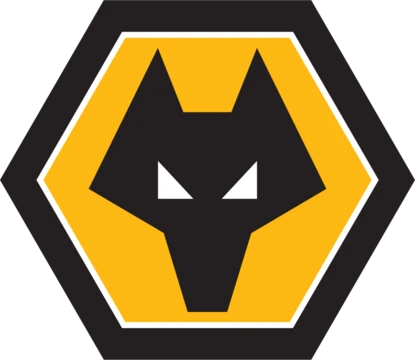
The Wolves
Gold and black, pack mentality, and a century of howling from Molineux.

Maize & Blue Nation · CC BY 2.0
The Wolves is the enduring nickname of Wolverhampton Wanderers Football Club, one of the oldest and most storied professional football clubs in England. Founded in 1877 in the industrial town of Wolverhampton, the club has carried the wolf moniker for well over a century, and it has become inseparable from the identity of the supporters who call themselves the 'Wolves.' The name evokes the pack instinct, the relentless running, and the fierce loyalty that the club and its fans have long associated with themselves. This entry explores what 'The Wolves' means as a cultural identity: the gold-and-black colours, the Molineux home, the golden era of the 1950s, and the traditions that make the nickname more than a label. It is a story of a working-class town's pride, a manager who built a dynasty, and a community that has rallied around the wolf through triumph and long lean spells alike.
- Top-flight league title
- 1953–54, 1957–58, 1958–59
Lore & Background
The nickname 'Wolves' has been attached to the club for generations, and while its exact origin is debated among supporters, it has always carried a sense of raw, untamed energy. In the early days of the club, when it was founded as St. Luke's FC and later became 'Wolverhampton Wanderers,' the wolf became a shorthand for the club's relentless style of play and the tight-knit, no-nonsense character of the West Midlands community that produced the players. To be a Wolf was to be part of a pack: you ran together, you defended together, and you did not leave a teammate behind. The 1950s remain the high-water mark of that identity. Under Stan Cullis, a former player who understood the club's soul, Wolves assembled a side of local lads and a few inspired outsiders who played with a ferocity and cohesion that captured the nation's imagination. The 1953–54 league title, followed by further championships in 1957–58 and 1958–59, are not merely trophies in a cabinet; they are the founding myth of modern Wolves identity. The pack had run down the field, and the whole town howled. Since then, the club has endured relegations, financial turbulence, and long stretches outside the top flight, but the identity has never wavered. The gold-and-black shirt, the howl from the stands at Molineux, and the simple declaration 'I'm a Wolf' remain the connective tissue between a 19th-century club and a 21st-century community. The wolf does not explain itself. It simply runs, bites, and returns to the pack.
In Their Own Story
The floodlights at Molineux hum to life on a cold February evening. The air smells of wet grass and chip fat from the kiosks on the Molineux Road. In the away end, a handful of visitors murmur about the 'gold shirts' they are about to see. In the home stands, the noise builds in layers: first the thump of drums, then the singing, then the howl—that long, guttural, almost animal sound that rolls off the concrete and into the winter sky. A boy in a too-large gold scarf presses his face to the railing. His grandfather, three rows back, taps the shoulder of the stranger next to him and says, without looking up, 'You heard the one about Mortensen, right? Three in the final. The lot of them.' The stranger nods. The boy does not know who Mortensen is, but he feels the story in the vibration of the ground beneath his boots. The whistle blows. The pack runs.
Reader's Guide
Molineux Stadium is more than a venue; it is the beating heart of Wolves culture. Tucked into a valley in the town of Wolverhampton, the ground has been the club's home since 1889, and its intimate, slightly old-fashioned feel is part of what makes the experience distinct. The stands are close to the touchline, and on a big night the noise is a physical thing, pressing against you as you walk down the concrete steps. The tradition of the 'howl' is central. It is not a choreographed chant but a spontaneous, almost involuntary roar that erupts from the home supporters when the team is on the front foot. It is the sound the nickname was made for. Supporters will tell you that you do not learn the howl; it learns you. The gold-and-black colourway is non-negotiable. Whether it is a scarf, a shirt, a pair of boots, or a badge pinned to a coat, the colours are a declaration of belonging. On matchdays, the stands become a single wave of gold, and the black trim catches the floodlights like ink on parchment. For the community, being a Wolf is not about the league table. It is about the town, the valley, the chip shop on the corner, and the unshakeable belief that the pack will always regroup. You do not need to have watched every season. You need to have felt the howl once.
Did You Know?
- Stan Mortensen scored a hat-trick in the 1953 FA Cup Final as Blackpool beat Bolton Wanderers 4–3, one of the most memorable individual performances in the competition's history.
- The club was originally founded in 1877 as St. Luke's FC before adopting the name 'Wolverhampton Wanderers' a few years later.
- The 1953–54 season, in which Wolves won the top-flight league title under manager Stan Cullis, was the first of three English top-division league championships for the club, with further titles in 1957–58 and 1958–59.
- Molineux Stadium has served as the club's home ground since 1889, making it one of the older continuously used football grounds in the country, though several other grounds have longer continuous histories.
Humble Beginnings and the Birth of a Club
The story of Wolverhampton Wanderers begins in a church school rather than a grand stadium. In 1877, two pupils of St Luke's Church School in Blakenhall, John Baynton and John Brodie, were presented with a football by their headmaster Harry Barcroft and founded St. Luke's F.C. The team played its first match on 13 January 1877 against a reserve side from Stafford Road. By August 1879, the club had merged with the football section of a local cricket club, Blakenhall Wanderers, and adopted the name Wolverhampton Wanderers. After initially playing on two strips of land in the town, they moved to Dudley Road in 1881 and won their first trophy, the Wrekin Cup, in 1884. The club's professional ambitions were realized in 1888 when it was selected as one of the twelve founding members of the Football League. Their first-ever league fixture came on 8 September 1888 against Aston Villa, and they finished the inaugural season in third place while also reaching their first FA Cup Final, where they lost 0-3 to Preston North End. At the end of that campaign, the club relocated to Molineux, then a pleasure park known as the Molineux Grounds, where they have remained ever since.
The Cullis Dynasty and European Pioneers
Under the management of Stan Cullis, Wolves achieved a remarkable run of domestic success, winning three league titles in 1953-54, 1957-58, and 1958-59. The club also claimed two more FA Cup finals, in 1949 and 1960, cementing their status as one of England's most decorated sides. Beyond domestic glory, Wolves played a pivotal role in the birth of European club competition. In 1953, they became one of the first British clubs to install floodlights at their home ground. Between 1953 and 1956, they arranged televised floodlit friendlies against leading overseas club sides, the most notable being the famous Honved game, which was instrumental in the launch of the European Cup in 1955. The club went on to reach the quarter-finals of the European Cup in 1959-60, the semi-finals of the 1960-61 European Cup Winners' Cup, and the inaugural UEFA Cup Final in 1972. Their domestic cup success continued with League Cup triumphs in 1974 and 1980, while the 1976-77 Second Division title marked another chapter in a long history of resilience.
Rock Bottom and the Great Resurgence
The early 1980s brought a financial crisis so severe that Wolves came close to liquidation in 1982. The sporting consequences were equally devastating: in the five seasons between 1981-82 and 1985-86, the club were relegated four times, with one promotion in 1982-83, ultimately ending up in the Football League Fourth Division for the first and only time in their history. Yet the club's character was defined by its ability to bounce back. After being beaten in the inaugural Football League play-off final in 1987, Wolves won the Fourth Division and Football League Trophy titles in 1987-88, followed by the Third Division title in 1988-89. This rapid climb back through the divisions demonstrated a resilience that would become a hallmark of the club. After fourteen seasons in the second tier between 1989 and 2003, Wolves reached the Premier League for the first time with victory in the 2003 play-offs, though they were relegated after a single season. They won the Championship in 2008-09 to return, but endured relegation in 2011-12 and again in 2012-13, dropping to League One.
Modern Ownership and the European Revival
Since 2016, the club has been owned by the Chinese conglomerate Fosun International, a period that has seen Wolves navigate the financial and sporting challenges of modern English football. After winning the League One title in 2013-14 and the Championship in 2017-18, the club secured a return to the Premier League. Perhaps the most remarkable achievement of this modern era came in 2020, when Wolves reached the UEFA Europa League final, ending a 39-year absence from UEFA competitions. The club's identity remains deeply rooted in its heritage: the traditional kit of old gold shirts and socks with black shorts, the wolf's head logo that has adorned the badge since 1979, and the home at Molineux Stadium, where they have played since leaving Dudley Road in 1889. Long-standing rivalries with West Midlands neighbours, particularly the Black Country derby against West Bromwich Albion, continue to define the club's local identity. The combination of historical depth and modern ambition makes Wolves a unique presence in English football.
Gallery



Frequently Asked Questions
What does 'The Wolves' actually refer to?
It is the enduring nickname for Wolverhampton Wanderers Football Club, a professional side established in 1877 in the industrial town of Wolverhampton. The wolf moniker has been inseparable from the club and its supporters for well over a century.
Why the wolf? What does the nickname symbolise to fans?
The image captures the pack mentality, relentless running, and fierce loyalty that supporters associate with the team. It acts as a cultural shorthand for a community that howls together from Molineux in gold and black.
Where do The Wolves play and what are their traditional colours?
The club calls Molineux Stadium in Wolverhampton home, and their traditional kit is gold and black. Those colours, paired with the wolf identity, form the visual core of the club's branding.
What are The Wolves's biggest honours?
The club clinched the top-flight league title in 1953–54 and lifted the FA Cup on three occasions: 1949, 1960, and 1993. Those achievements anchor the club's place among England's most storied professional sides.
Why does the 'Wolves' identity matter to the fanbase?
It binds a community of supporters to a shared heritage stretching back to the 1870s, rooted in the industrial character of Wolverhampton. The nickname turns a football club into something closer to a tribal identity, where pack instinct and the howl from the stands define what it means to be a Wolf.
More in Stadium & Culture
Elsewhere in the Wolverhampton Wanderers universe
Spotted an error? Know more?
This is a living reference — every entry is fact-audited, and reader corrections feed straight into our audit queue. Suggest an edit · See this site's audit record