
Molineux Stadium
Since 1889, the howl of the crowd has echoed off Molineux Street.

via Wikipedia: Molineux Stadium · see source
Molineux Stadium is the home ground of Wolverhampton Wanderers Football Club, situated in the city of Wolverhampton in the West Midlands of England. Named after the street on which it stands—Molineux Street—the ground has been the spiritual home of the 'Wolves' since 1889, making it one of the oldest continuously used football grounds in the country. The current all-seater stadium opened in 1997 following a full redevelopment of the historic site, but the name, the identity, and the fierce local passion that define Molineux stretch back more than a century of league football, cup battles, and unforgettable afternoons under the floodlights.
- Location
- Wolverhampton, West Midlands, England
- Home to
- Wolverhampton Wanderers FC
- Opened
- 1889
- Named after
- Molineux Street
- Redeveloped
- 1997
Verified Timeline
Lore & Background
The original Molineux was a modest Victorian ground with open terraces, a wooden scoreboard, and a reputation for producing some of the most electric atmospheres in English football. For generations, supporters stood shoulder to shoulder on the terraces, their voices rising into the Midlands sky as the Wolves chased league titles and cup glory. The ground was not merely a venue; it was a civic institution woven into the identity of Wolverhampton, a working-class city proud of its footballing heritage. The name 'Molineux'—drawn simply from the street—became a shorthand for everything the club stood for: grit, loyalty, and an unapologetic local pride that no amount of modernity could dilute. The 1990s brought the inevitable transformation demanded by the Taylor Report, which required all-seater stadia and modern safety standards. The beloved old terraces were dismantled, and a new Molineux rose on the same ground, opening its doors in 1997. Yet the soul of the place endured. The same postcode, the same street name, the same roar when the home side scored. Fans who had watched their grandfathers play at the old ground now watched their own children do the same, and the continuity of that ritual is what makes Molineux more than a stadium—it is a living memory. Over the decades, Molineux has hosted international fixtures for England and Wales, FA Cup ties against the nation's biggest clubs, and countless League matches in which the Wolves have been the underdogs, the favourites, and everything in between. The ground has seen the club at the very pinnacle of English football and in the lower divisions, and through it all, the crowd has remained the constant: loud, loyal, and utterly devoted.
In Their Own Story
The November fog had rolled in off the Black Country, curling around the floodlight pylons and softening the edges of the stands until Molineux looked like a painting left out in the rain. Inside, the air was thick with the smell of wet wool, Bovril, and the particular electricity that builds before kickoff. A young boy in a too-large Wolves scarf pressed his face against the turnstile glass, watching the players jog out from the tunnel—navy and gold, the colours that had meant something to his grandfather, his father, and now him. The away end was a distant murmur. The home end was a single, breathing organism. When the ball struck the crossbar and bounced back into the net, the roar that erupted was not sound so much as pressure, a physical force that pressed against the chest. The boy did not cheer. He simply stood there, mouth open, feeling the ground vibrate beneath his trainers, and understood—without words, without explanation—why this place had kept the same name for over a hundred years.
Reader's Guide
The 1950s remain the defining era of Molineux in the collective memory of every Wolves supporter. Under manager Stan Cullis, the club produced a side of extraordinary technical quality and attacking flair, winning the First Division title in 1953–54 and completing the Double with the FA Cup final the same season. They added another league title in 1957–58. These were not accidental triumphs; they were the product of a philosophy—open, flowing football played by players who understood each other without a word—and Molineux was the stage on which that philosophy was performed to full-house crowds who recognised, in real time, that they were witnessing something rare. What defined this era was not merely the silverware but the identity it cemented. The Wolves were not a big-city club, not a club with the deepest purse in the League. They were a West Midlands side that played the most attractive football in the country, and Molineux was the proof. Supporters from every corner of the city made the pilgrimage, and the terraces became a cathedral of belief. Why it matters: this era is the touchstone against which every subsequent generation measures the club. When the Wolves are doing well, the comparison is made. When they are struggling, the memory is a comfort and a challenge. Molineux in the 1950s is not just a chapter in the history book; it is the origin myth, the 'we were once the best' story that keeps the faith alive on every subsequent matchday.
Did You Know?
- The ground is named after Molineux Street, the road on which it stands, not after a person or family.
- Molineux has been the home of Wolverhampton Wanderers since 1889, making it one of the oldest continuously used football grounds in England.
- The current all-seater stadium opened in 1997, replacing the old terraced ground in line with post-Taylor Report safety requirements, but retained the original name and location.
- The ground has hosted international matches for both England and Wales over the decades, serving as a neutral and home venue for national football.
Pioneering Origins & the Birth of a Purpose-Built Ground
Molineux carries a distinction few grounds can claim: it was the first stadium constructed exclusively for a Football League club. The story reaches back to 1744, when local merchant Benjamin Molineux bought the land and built Molineux House upon it. By 1860 the estate had become a public pleasure park offering an ice rink, a cycling track, a boating lake, and a football area. In 1889 the Northampton Brewery acquired the grounds and leased them to Wolverhampton Wanderers, who had previously played at Dudley Road. After renovations, the site became the first ground dedicated solely to a football team. The inaugural league fixture was staged on 7 September 1889, with Wolves beating Notts County 2–0 before 4,000 spectators. The club purchased the freehold in 1923 for £5,607 and subsequently erected major stands, including one designed by architect Archibald Leitch, completing a four-stand configuration by 1934 that would define the ground for the following half-century.
Floodlights, Prestige, and the Dawn of European Competition
In 1953 Wolverhampton Wanderers invested around £10,000 to install floodlights at Molineux, placing the club among the first in Britain to adopt the technology. The first floodlit match took place on 30 September 1953, a 3–1 victory over South Africa officiated by Mr. F Read of Willenhall. This innovation unlocked a string of midweek friendlies against international opponents. Before the European Cup and other continental club competitions existed, these fixtures carried enormous prestige, regularly drawing huge crowds and attracting BBC television coverage. A taller set of floodlights was installed in 1957 at a cost of £25,000, preparing the ground for its first European Cup ties. The stadium went on to host some of the earliest European club games in the 1950s and, most notably, staged the first UEFA Cup Final in 1972. This era cemented Molineux's reputation as the venue where the sport's most significant early international encounters took place, long before the modern landscape of continental competition.
The All-Seater Transformation & the Modern Four-Stand Layout
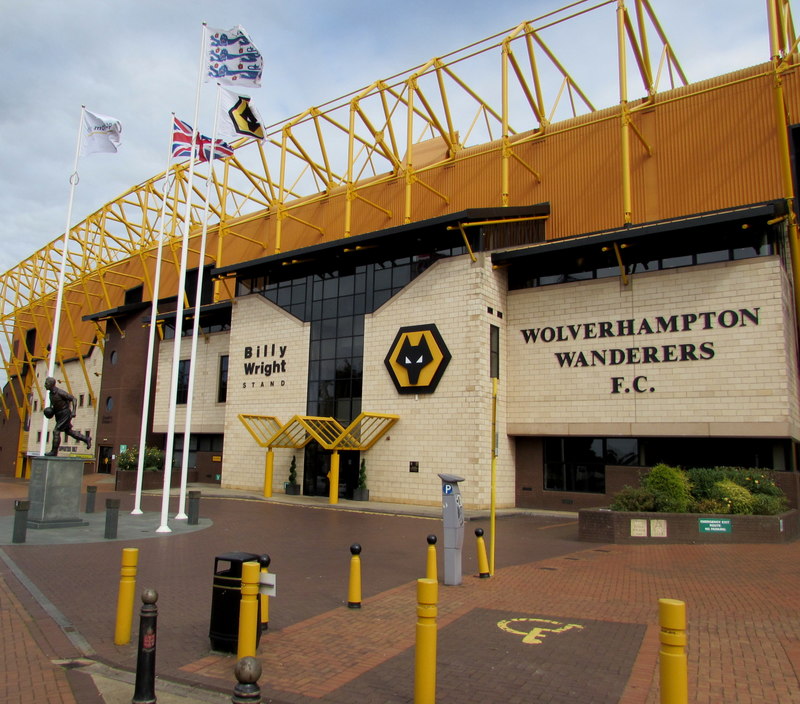
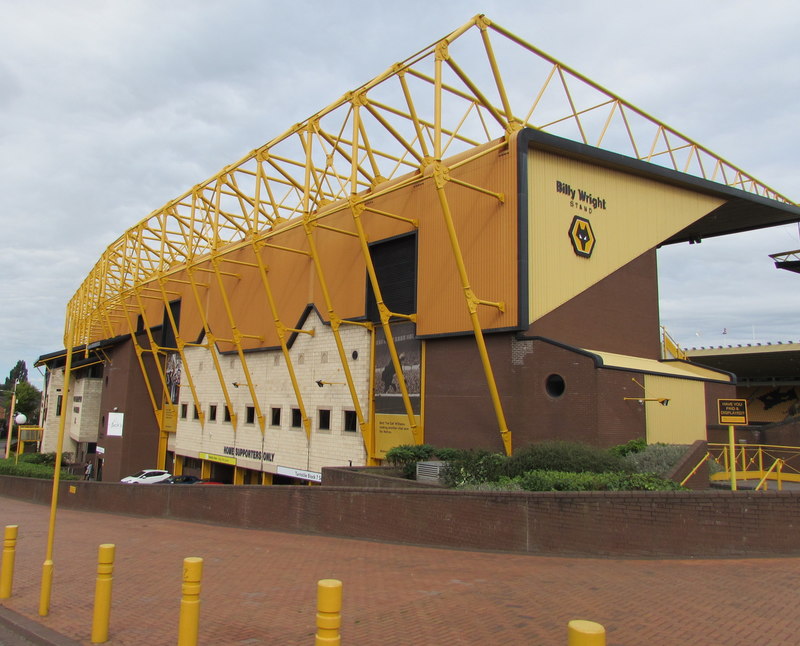
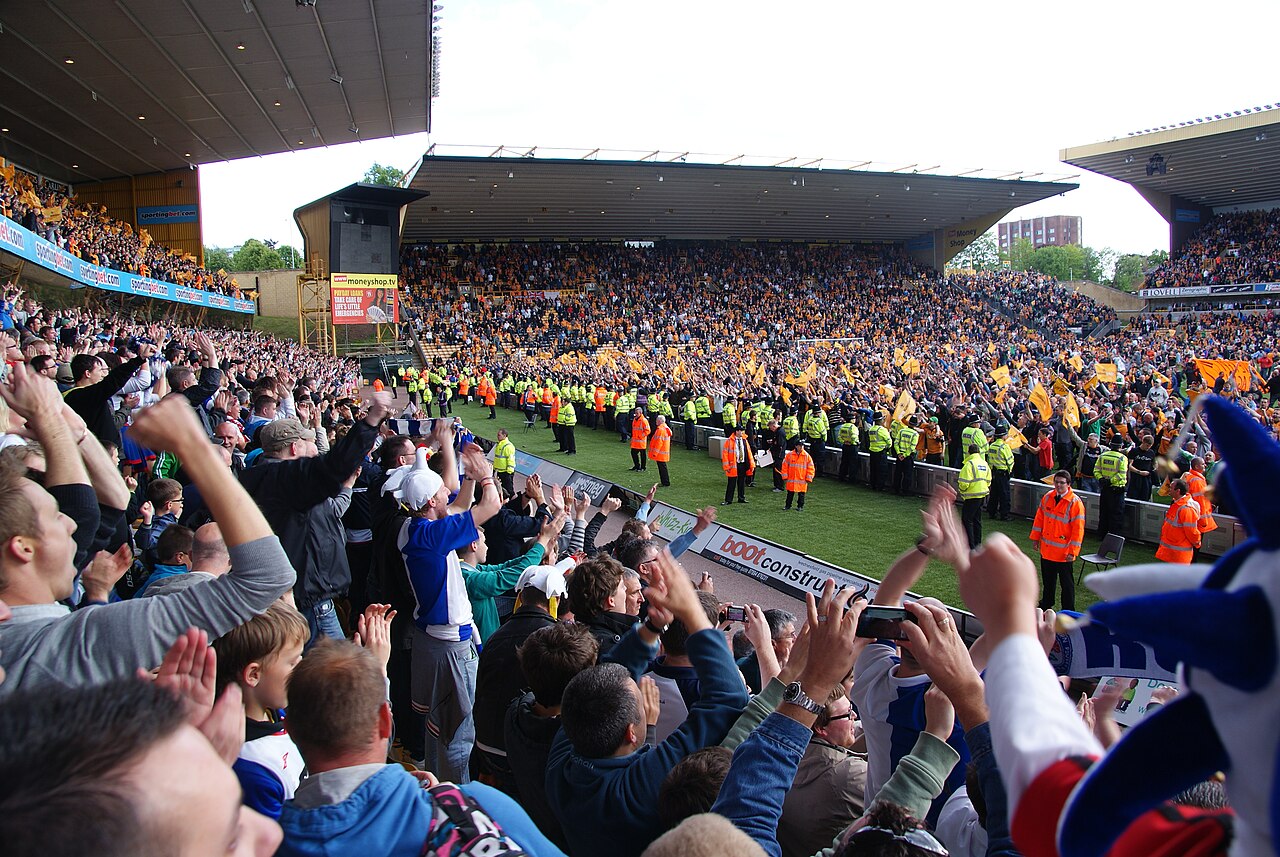
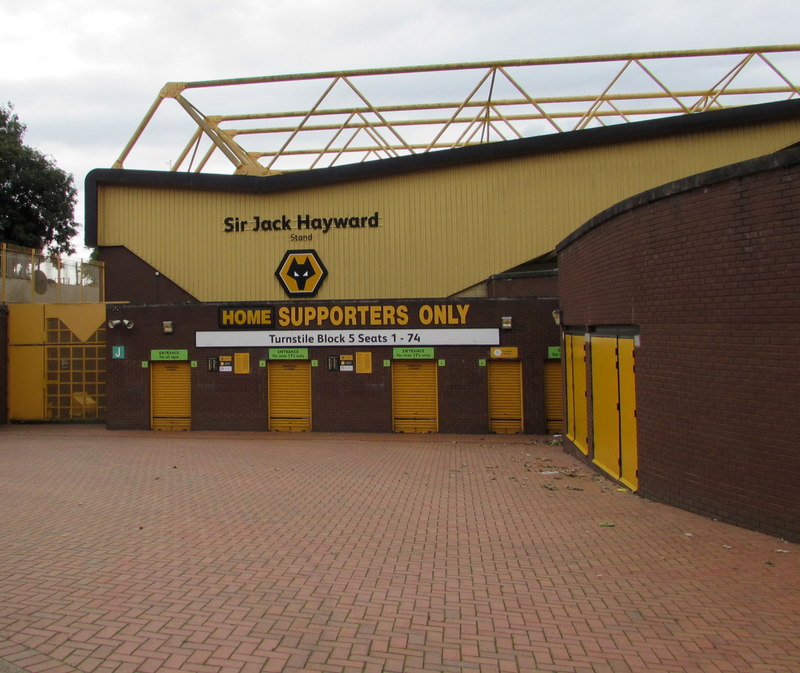
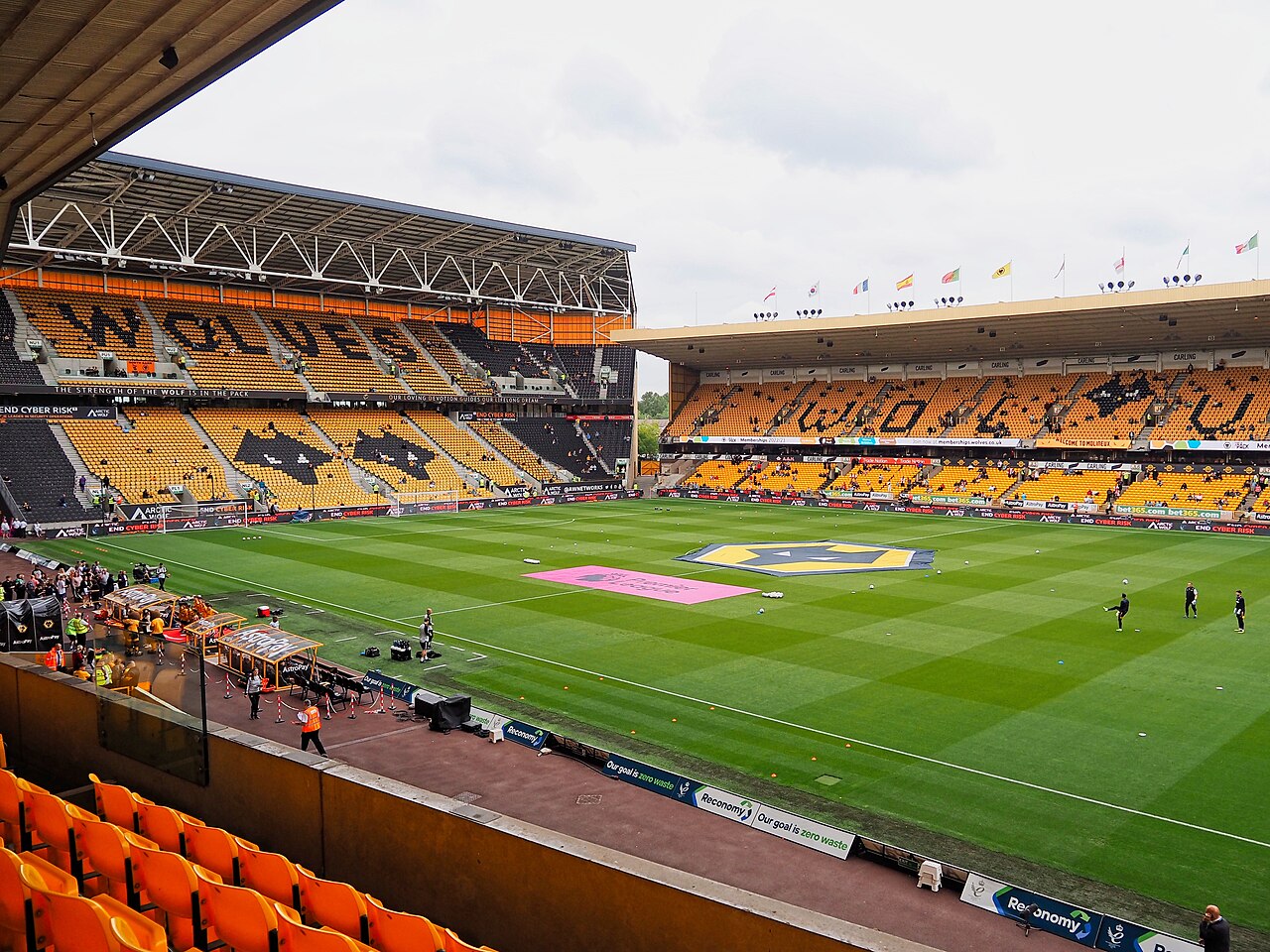
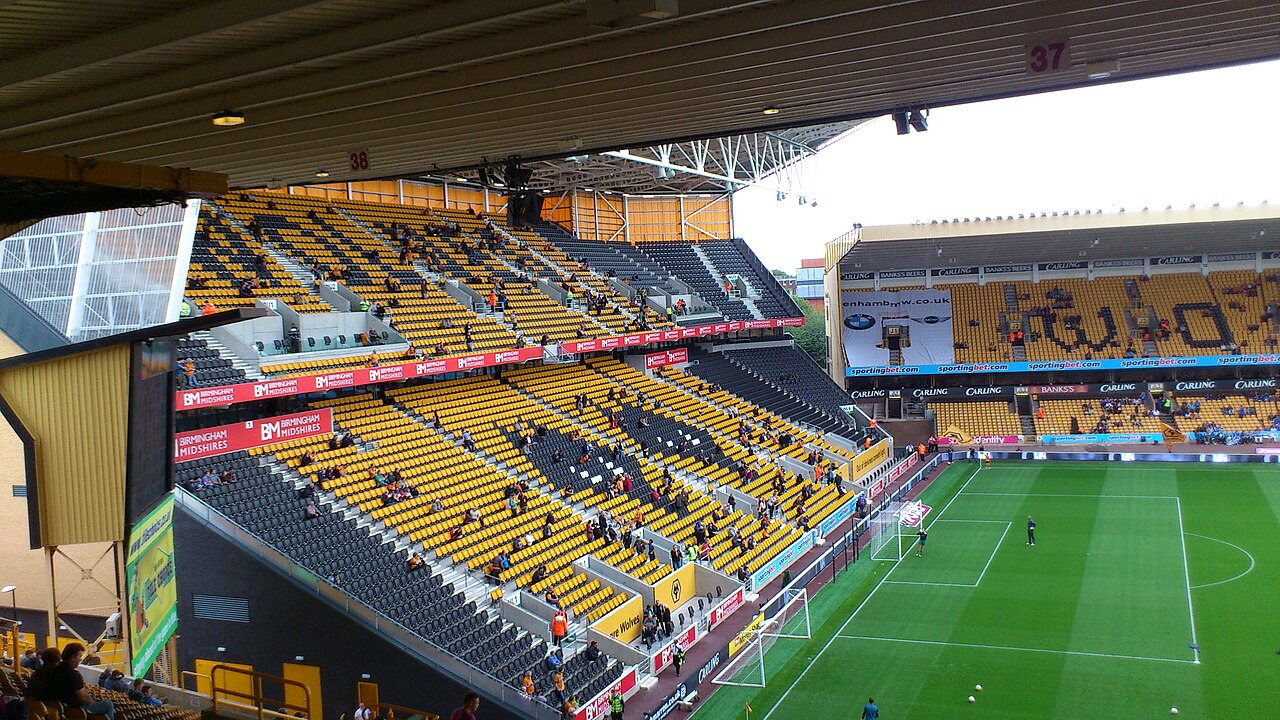
The current face of Molineux was born from the early-1990s multi-million-pound redevelopment that converted the ground into a modern all-seater venue in compliance with the Taylor Report, which mandated seating for every spectator in British football. At the time of that renovation, Molineux was among the largest and most contemporary stadia in the country, though it has since been surpassed by other ground projects. The stadium now comprises four stands: the Steve Bull Stand, the Sir Jack Hayward Stand (a single-tier safe-standing terrace also known as the South Bank), the Stan Cullis Stand (the North Bank), and the Billy Wright Stand, which houses dressing rooms, media booths, and the family section. The Stan Cullis Stand was the most recently rebuilt, with its lower tier of 4,000 seats opening in September 2011 and the upper tier of 3,700 completed by the start of the 2012–13 season, lifting overall capacity to 31,700. A further £40 million programme announced in 2010 aimed to reach 38,000 seats, but the remaining phases were postponed as the club redirected funds toward its youth academy.
England Internationals, Concerts, and the Era of Terraced Crowds
Molineux has a distinguished record of hosting national team fixtures, having staged six England senior internationals spanning over a century. The first was a 6–1 thrashing of Ireland on 7 March 1891, followed by another victory over Ireland (4–0) in 1903 and a 2–1 loss to Wales in 1936. The ground also featured in a 1958 World Cup qualifier, with England defeating Denmark 5–2 in December 1956. More recently, in 2022, Molineux hosted a Nations League draw with Italy (0–0) and a 0–4 defeat to Hungary. The stadium has also been a venue for four England under-21 internationals in 1996, 2008, 2014, and 2018, as well as European Youth Championship qualifying matches in 2005. Beyond football, Molineux proved its versatility on 24 June 2003, when Bon Jovi performed to a crowd of 34,000, making it Wolverhampton's largest live concert venue. The ground's record attendance of 61,315, set during a 1939 First Division match against Liverpool, remains a testament to the electric atmosphere that once filled its terraced banks.
Gallery
More in Club History
Related in Wolverhampton Wanderers
Links follow this subject's own source article.
Elsewhere in the Wolverhampton Wanderers universe
Spotted an error? Know more?
This is a living reference — every entry is fact-audited, and reader corrections feed straight into our audit queue. Suggest an edit · See this site's audit record