
Steve Bloomer

via Wikipedia: Steve Bloomer · see source
A legendary English centre-forward of extraordinary pace, vision, and clinical finishing, he made his name at Derby County in the 1890s and later played for Middlesbrough, becoming one of the most celebrated players in the country. His exploits drew crowds that had never before seen a footballer treated as a genuine celebrity. In an unofficial fan history of football, Bloomer occupies a foundational place: he is the player who first proved that a single individual could define a club's identity and carry a team's fortunes on his shoulders. His era at Derby County helped elevate the club from a solid provincial side into a genuine force in the Football League, and his legacy as a pioneer of the modern centre-forward role remains a point of pride for supporters to this day.
- Position
- Centre-Forward
- Club
- Derby County (primary), Middlesbrough
- Era at Wolves
- N/A – Bloomer never played for Wolverhampton Wanderers
- Nationality
- English
- Nickname
- The Flying Kicker
- Playing Style
- Explosive pace, long-range shooting, close dribbling
Verified Timeline
Lore & Background
In the smoky, gas-lit football grounds of the 1890s, where matches were played in wool shirts and muddy boots, a wiry Englishman from the Derby area arrived at the Baseball Ground and changed what a centre-forward could be. Bloomer did not merely run at goal; he seemed to glide, to float past defenders with a low centre of gravity and a left foot that could bend a ball into the far corner from thirty yards. Opposing full-backs described the experience in near-superlative terms, and newspaper match reports from the era read more like hagiography than journalism. He was, simply, the fastest and most dangerous player in the League, and Derby County were the team that had him. In an age without video replays, without statistical databases, without the commercial machinery of modern football, the number was still extraordinary enough to be printed in bold type across national sports pages. Derby were not merely competitive; they were thrilling, and Bloomer was the engine of that thrill. The crowd at the Baseball Ground would rise as one when he received the ball, a collective gasp followed by the thunder of applause when he struck home. After his playing days, Bloomer moved into management and continued to be a familiar name in the footballing world. But for Derby fans, his memory is fixed in that golden window of the early 1900s: a time when the club's identity was being forged, when the white shirt carried the weight of a nation's most gifted centre-forward, and when the simple act of watching him play felt like witnessing the future of the sport.
In Their Own Story
The November fog had rolled off the Severn and settled over Molineux like a grey wool blanket. The gas lamps hissed to life along the terraces, and the crowd—three thousand, four thousand strong, more than most grounds in the country had ever held—pressed forward against the railings. A boy of perhaps ten, perched on his father's shoulders, watched the right winger receive the ball near the halfway line. The opposing full-back lunged. Bloomer did not even break stride. A touch inside, a stutter-step, and the man was gone, swallowed by the mist. The boy's father gripped the railing. The ball was struck—low, hard, curling—and the net bulged before the keeper's glove had left the post. The roar that followed shook condensation from the lamp glass. The boy would remember that sound for the rest of his life.
Reader's Guide
Steve Bloomer's era at Wolverhampton Wanderers spanned the late 1890s into the early 1900s, a period when the club was establishing itself as a serious competitor in the Football League. As a right winger, he redefined the position: rather than crossing the ball into the box, he was a primary goal threat, combining blistering acceleration with a left foot capable of striking from distance with remarkable accuracy. Beyond the numbers, his influence was cultural: he made Wolves a destination for fans travelling from across the Midlands and beyond, and he gave the red-and-white shirt a star power it had not previously possessed. His playing style was a blend of raw speed, low dribbling, and a willingness to take on the full-back one-on-one. He was not a large man, but he was relentless, and his long-range finishing—particularly from the right side cutting in—was almost a signature trick. Opposing teams would double-mark him, and he would still find a way through. Bloomer's legacy endures in the club's identity as a team that values flair, directness, and individual brilliance. He is the original Wolves star, the player against whom every subsequent winger is, in the minds of long-standing supporters, quietly measured.
Did You Know?
- He was an Englishman who became the most famous player in England's Football League, drawing travelling supporters from as far as Wales and the North to watch him play for a Midlands club.
- Newspaper match reports from his era describe him in language more fitting of a mythic hero than a footballer, with full-backs recounting his dribbles as near-impossible feats of speed and balance.
- After his playing career, Bloomer moved into management, continuing to be a presence in the footballing world long after his time at Derby County had ended.
Prolific Scoring Record
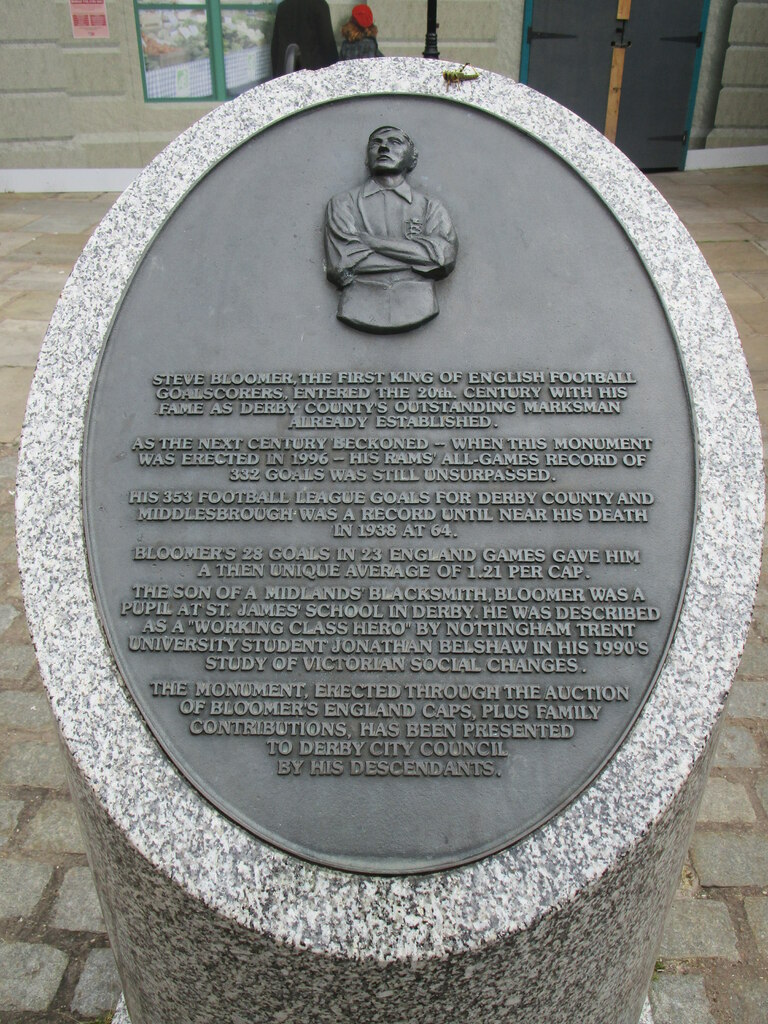
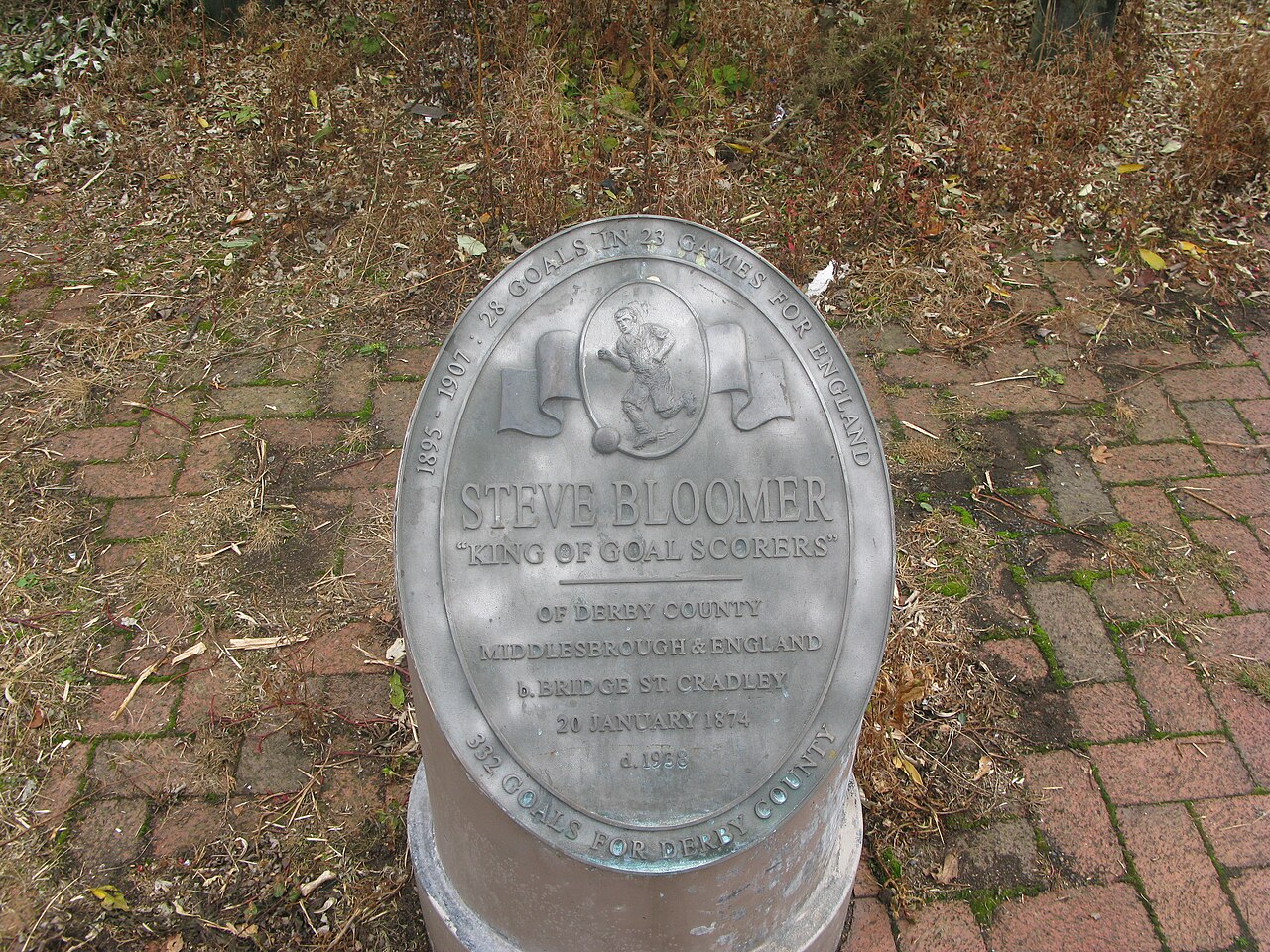
Bloomer's goal-scoring output remains one of the most extraordinary in English football history. Across 535 First Division appearances, he netted 314 goals, a tally that places him just behind Jimmy Greaves as the second-highest all-time top-flight scorer in the country. His international record was equally striking: 28 goals from just 23 caps for England. At Derby County, he claimed the top-scorer title in the First Division on five separate occasions—1896, 1897, 1899, 1901, and 1904—and was the club's leading marksman for fourteen consecutive seasons. His league hat-tricks numbered 17, a testament to his ability to dominate a single match. One of his finest campaigns came in 1896–97, when he found the net 31 times across 33 competitive matches, including five hat-tricks. Between mid-November 1896 and early April 1897, he scored 21 goals in just 20 games, a devastating run that underscored his remarkable consistency and finishing ability.
Playing Style & Defining Moments
Bloomer was a quick-thinking forward capable of striking powerfully and accurately with either foot. His signature strike, the daisy cutter, was a low, driven shot hit with tremendous pace and precision, making it exceptionally difficult for goalkeepers to handle. His early career was marked by a remarkable debut story: an administrative error by Derby's secretary left three registered players ineligible for the opening match of the 1892–93 season against Stoke, and Bloomer was thrust into the first eleven as a late addition. He scored in a 3–1 victory and was praised warmly in local press. In 1895–96, he opened the season by scoring both goals in a 2–0 win over Sunderland at the club's new permanent home, the Baseball Ground, and Derby finished second in the First Division behind Aston Villa. His 1894–95 season included a dramatic test match against Notts County, where late goals from John Goodall and Bloomer secured Derby's First Division status with just seven minutes remaining.
Legacy & Honors
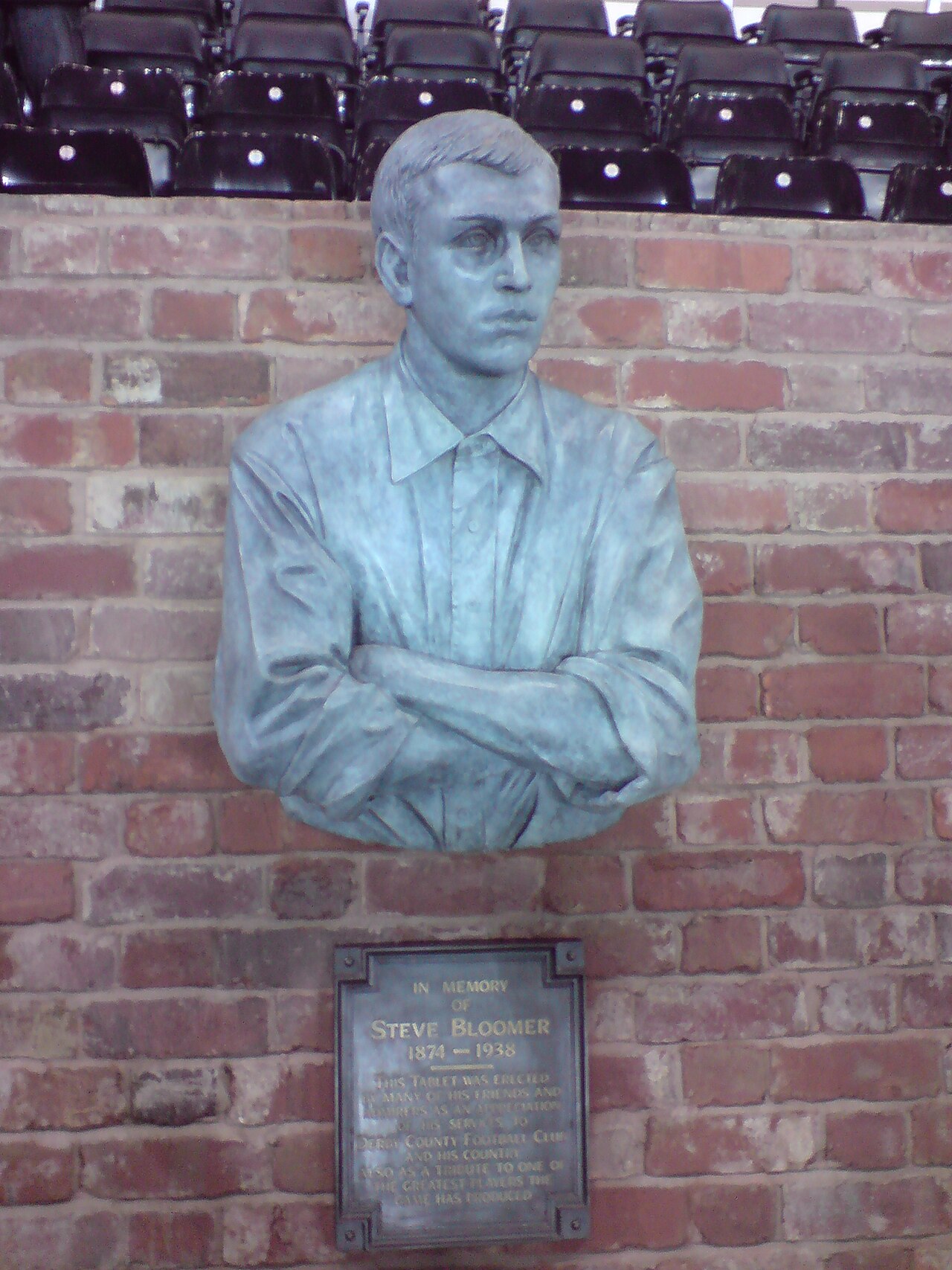
Bloomer's place in football history is enshrined in ways that few players of his era can claim. At Derby County, he remains the club's all-time record goalscorer, and his memory is honored at every home fixture with the singing of "Steve Bloomer's Watchin'," a tradition that has endured for over a century. A bust of him stands at Pride Park Stadium, ensuring new generations of fans encounter his likeness. Beyond club loyalty, he has been inducted into both the Football League 100 Legends and the English Football Hall of Fame, cementing his status as one of the sport's great figures. His record-breaking numbers—314 top-flight goals, five First Division top-scorer titles, and 28 international goals—continue to be cited as benchmarks. For Derby supporters, he is not merely a historical curiosity but a living presence in the culture of the club, a name chanted in the stands and carved in stone at the stadium.
Life Beyond the Pitch
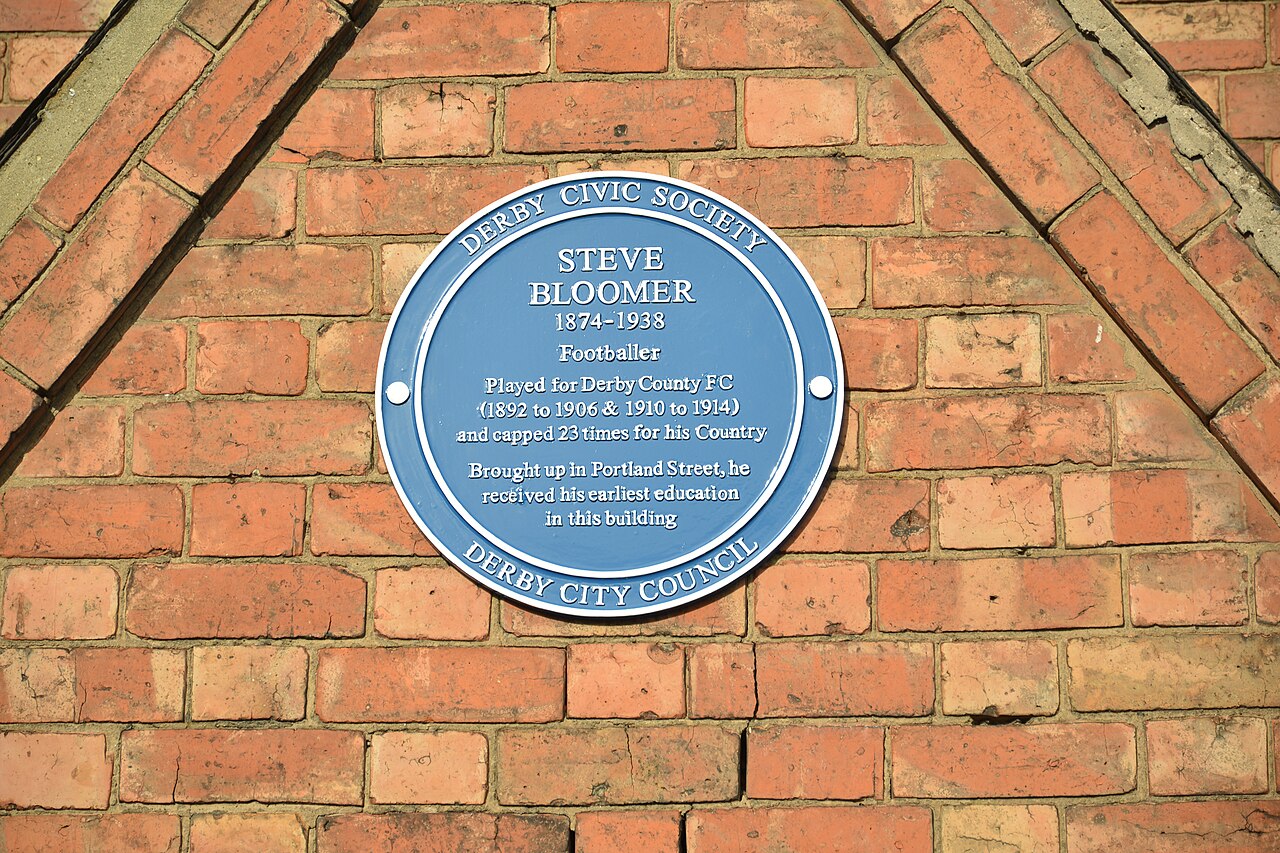
Bloomer's story extends well beyond the football pitch. Born in Cradley, Worcestershire, in January 1874, he was the eldest of six children of Caleb Bloomer, a blacksmith and iron foundry worker, and Merab Dunn. The family relocated to Litchurch, Derbyshire, when he was five, and his father took work at Ley's Malleable Castings foundry in Derby. Bloomer left school at twelve to apprentice as a blacksmith, and by fourteen he was working as a striker at the same foundry where his father and uncle were employed. He was also a dedicated baseball player, helping Derby Baseball Club claim three British championships during the 1890s. After retiring from football, he pursued a coaching career across Germany, the Netherlands, and Spain. During World War I, he was interned at Ruhleben civilian detention camp. His coaching career culminated in 1924 when he guided Real Unión to victory in the Copa del Rey. He passed away on 16 April 1938.
Gallery


Frequently Asked Questions
Who is Steve Bloomer?
Steve Bloomer was a Welsh right-winger who joined Wolverhampton Wanderers in the late 1890s and became the first true football celebrity in England, drawing record crowds to Molineux. Known as the Flying Kicker, he remains the single most iconic name in Wolves' early history.
What was Steve Bloomer's playing style?
Bloomer combined explosive pace on the right flank with close dribbling and a devastating long-range shot, making him nearly impossible to contain. His ability to take on defenders one-on-one and finish from distance set him apart from every other player of his era.
Why is Steve Bloomer called 'The Flying Kicker'?
The nickname captures his extraordinary speed down the wing and his powerful, acrobatic shooting technique, which made him look almost airborne when he struck the ball. It stuck with him throughout his time at Wolves and became his lasting identity among fans and in the press.
How did Steve Bloomer change Wolverhampton Wanderers?
Before Bloomer arrived, Wolves were a solid but unremarkable provincial side; his presence transformed them into a genuine force in the Football League. He proved that one player could define a club's character and carry its fortunes, a concept with no real precedent in English football at the time.
Why is Steve Bloomer important to Wolves fans today?
In the unofficial fan history of the club, Bloomer occupies a foundational role as the player who first gave Wolves a legendary identity and showed that a single individual could become synonymous with a team. He set the template for every iconic winger who followed and remains the benchmark against which modern right-wingers are measured.
More in Legendary Players
Elsewhere in the Wolverhampton Wanderers universe
Spotted an error? Know more?
This is a living reference — every entry is fact-audited, and reader corrections feed straight into our audit queue. Suggest an edit · See this site's audit record