Billy Wright
Six hundred and forty-six games, one club, and a defensive masterclass that never let Wolves down.

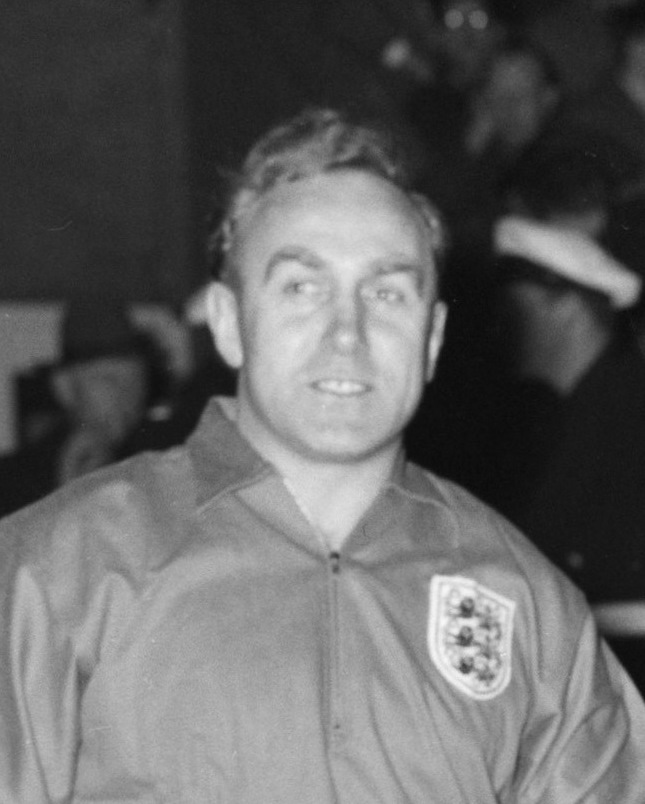
via Wikipedia: Billy Wright (footballer, born 1924) · see source
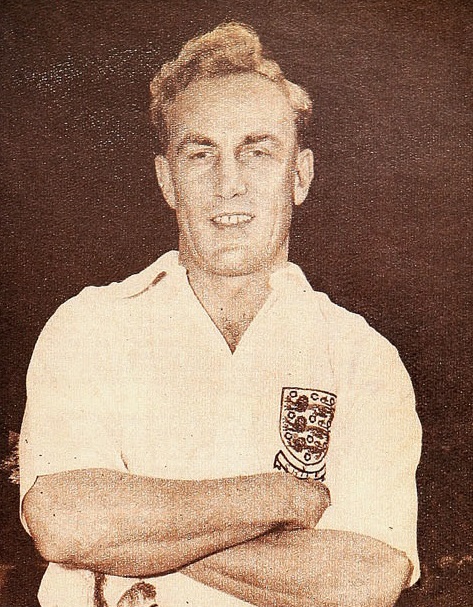
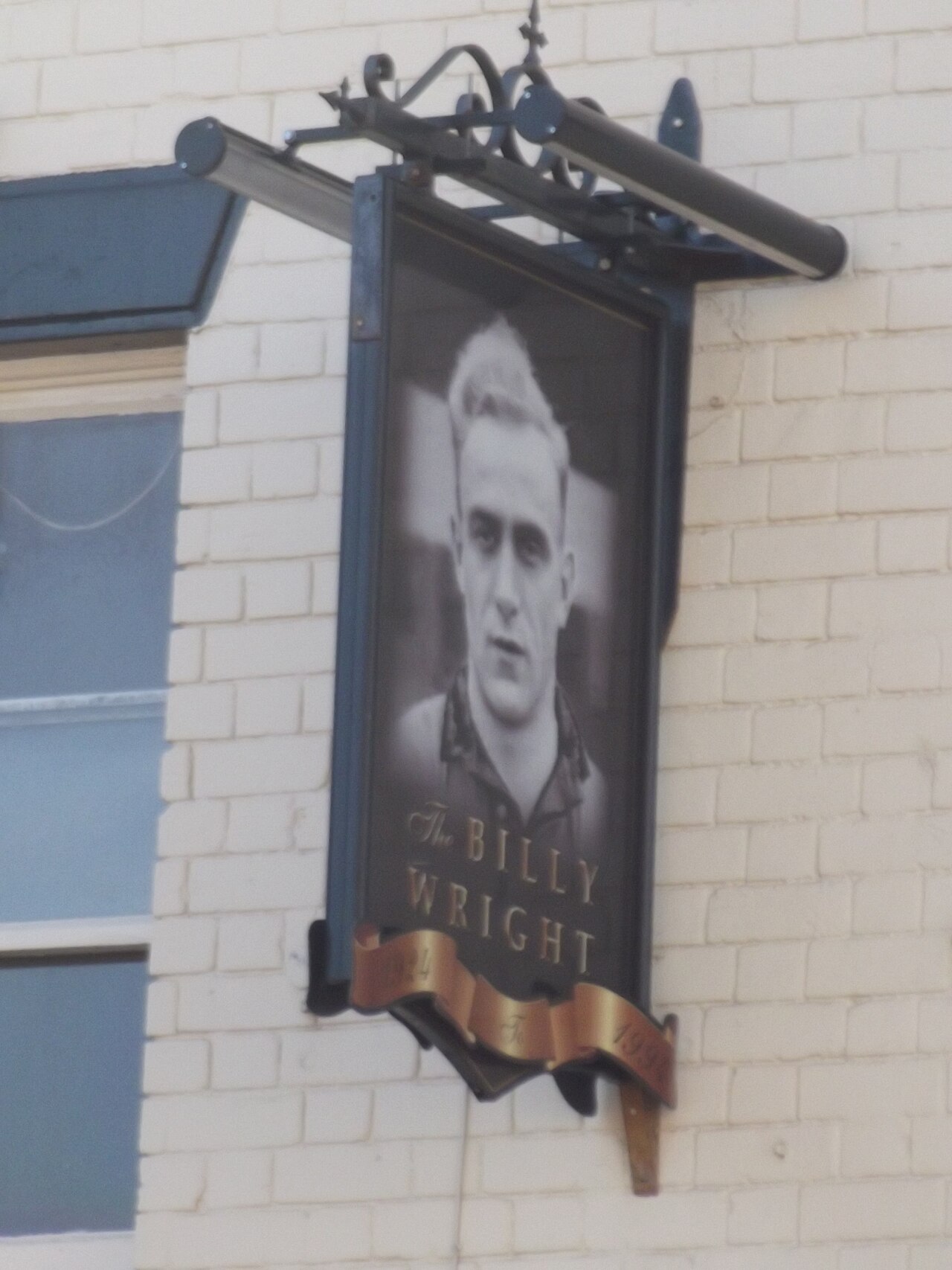
Billy Wright is one of the most enduring names in Wolverhampton Wanderers' history, a centre-half who gave his entire professional career to the club and became the embodiment of its post-war golden era. For fans, his name is shorthand for loyalty, grit, and the belief that Wolves could stand with the very best in English football.
- Position
- Centre-half (began career as right-back)
- Era
- Wolverhampton Wanderers' post-war golden era
Verified Timeline
Lore & Background
Billy Wright arrived at Wolves in the immediate aftermath of the Second World War, a time when the club was rebuilding its identity and its squad. He was not the flashiest player on the pitch, but he was the one every opponent knew they would have to deal with first. The 1948 FA Cup final at Wembley, where Wolves defeated Preston North End 3-1, is the match most associated with Wright's name. He was part of a side that played with a confidence and a style that set them apart, and his performance at centre-half was a cornerstone of that victory. In the seasons that followed, Wolves finished second in the First Division on multiple occasions, and Wright was the constant, the unshakeable centre-half who gave the team its shape and its backbone. Wright never played for another club. In an era when players moved between clubs with some regularity, his decision to give everything to Wolves for over a decade was extraordinary. For generations of Wolves supporters, Billy Wright represents the ideal: total commitment, unglamorous excellence, and the quiet pride of a man who chose one home and gave it everything he had.
In Their Own Story
The floodlights at Molineux hummed to life on a cold April evening in 1948. The FA Cup final was weeks away, but the team was already running through its patterns on the training ground, the ball thumping off the back of the net in short, sharp bursts. Wright stood at the left touchline, his boots caked in the wet clay of the Midsomerland, watching the wingers drill their crosses. He didn't need to shout. He didn't need to. He simply jogged up the flank, took the ball on his left, and sent a curling drive into the six-yard box where Mortensen was waiting. The net rippled. The lads cheered. Wright said nothing, wiped the mud from his shin pad, and jogged back to his mark. That was the whole of it. That was the whole of Billy Wright. No speeches, no ceremony. Just the left foot, the run, and the quiet, absolute certainty that the job would be done again tomorrow.
Reader's Guide
What he built, over the next few seasons, was something genuinely special: a team that combined physical toughness with a technical fluency that was rare in English football of the period. What defined this era was not just the results but the identity. Wolves played with a confidence and a style that made them stand apart. They were not the biggest names in the league, but they played like a team that believed they belonged at the top. Wright was the personification of that belief: a player who was never the most celebrated, never the most decorated, but who was the one every teammate and every opponent knew was non-negotiable. Why it matters: This era is the bedrock of Wolves' self-image. Every time the club has struggled in subsequent decades, supporters have pointed back to the Wonder years as proof that the club's identity — hard work, local pride, collective effort over individual star power — is something that can be rebuilt.
Did You Know?
- Wright was part of the Wolves squad that won the FA Cup in 1948, defeating Preston North End 3-1 at Wembley.
- Wright was a centre-half who began his career as a right-back, known for his composure, reading of the game, and leadership at the heart of the defence.
A Lifelong Bond with Wolves
From the moment a fourteen-year-old boy answered a newspaper ad for trials at Wolverhampton Wanderers in 1938, Billy Wright's identity became inseparable from that club. Major Frank Buckley had initially dismissed him as too small, yet the young Shropshire lad—son of a Coalbrookdale ironworks worker—was taken on as part of the ground staff. World War II interrupted his early progress, and he even guested for Leicester City in both forward and defensive roles before a broken ankle and a stint as a Physical Training Instructor with the Kings Shropshire Light Infantry threatened to end his playing days. He returned to make over a hundred wartime appearances for Wolves. His official competitive debut came in January 1946 in the FA Cup, and he was elevated to club captain shortly thereafter. Under his leadership, Wolves claimed the First Division title on three occasions in the 1950s and lifted the FA Cup in 1949. Remarkably, he missed just thirty-one matches for the club throughout the entire 1950s decade before retiring in April 1959.
A Record-Breaking England Career
Right from his full international debut on 28 September 1946—a resounding 7–2 victory over Ireland—Wright established himself as a mainstay of the England side. Appointed captain in 1948, he wore the armband for a then-record ninety matches, a tally later matched by Bobby Moore. His consistency was extraordinary: he accumulated seventy consecutive full international appearances and one hundred and five in total, finding the net three times. In 1952, his forty-second cap saw him surpass Bob Crompton's appearance record, which had stood since 1914. The most celebrated milestone arrived on 11 April 1959, when a 1–0 win over Scotland at Wembley made him the first player anywhere in the world to reach one hundred caps for his nation. That mark endured for more than a decade before Bobby Charlton finally passed it. Wright captained England through the 1950, 1954, and 1958 World Cup tournaments, and even more than sixty years after his retirement, only eight players have surpassed his England appearance total.
The Arsenal Experiment
Following his playing retirement, Wright briefly managed England's youth setup in 1960 and was initially selected as Walter Winterbottom's assistant ahead of the 1962 World Cup in Chile. However, he declined that position to take the top job at Arsenal, replacing George Swindin. His first campaign was encouraging: the Gunners finished seventh and qualified for European competition for the very first time in the club's history. Yet momentum stalled. Wright's transfer policy produced a mixed bag—Bob Wilson, Joe Baker, and Frank McLintock proved valuable, while others like Ian Ure fell short. Form deteriorated season by season, and his overall win percentage of just 38.46% remains the lowest of any post-war Arsenal manager, excluding caretakers. The 1965–66 campaign was particularly painful, with Arsenal finishing fourteenth and suffering an FA Cup exit at the hands of Blackburn Rovers, a team that ultimately ended the season at the bottom of the First Division. The board moved to dismiss him in the summer of 1966. Writer Brian Glanville later observed that Wright lacked the guile and authority needed to make the operation work.
Life Beyond the Pitch and Lasting Legacy
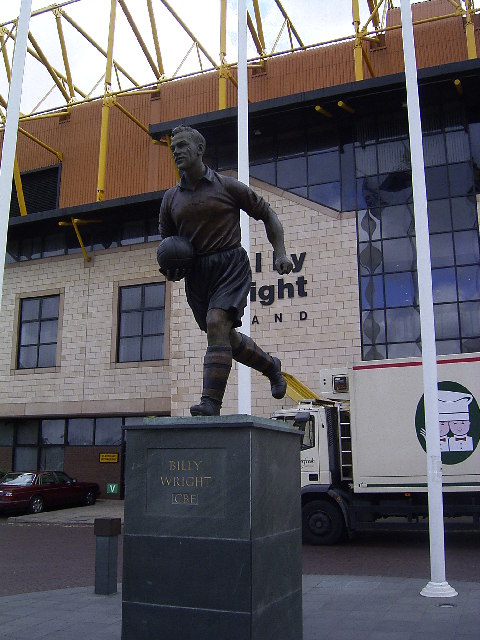
Beyond the football pitch, Wright's life carried a distinctive public dimension. His July 1958 marriage to Joy Beverley of the Beverley Sisters—when he was thirty-four—predated the modern era of footballers' celebrity partnerships and proved one of showbiz's most enduring unions. After his Arsenal tenure, he successfully conquered alcoholism and reinvented himself in broadcasting, serving as a television pundit and Head of Sport for both ATV and Central Television until 1989. The following year he joined the Wolverhampton Wanderers board of directors during Sir Jack Hayward's takeover. In 1993 he presented the FA Charity Shield to Manchester United and attended the re-opening of the rebuilt Molineux, where a new stand was named in his honour. He appeared on This Is Your Life twice—first in 1961 with Eamonn Andrews, then in 1990 with Michael Aspel—and received his CBE in June 1959. Wright passed away from pancreatic cancer on 3 September 1994, aged seventy.
Gallery

Frequently Asked Questions
Who is Billy Wright in Wolves history?
He was a left-back who gave his entire professional career to Wolverhampton Wanderers and became the defining figure of their post-war golden era.
How many games did Billy Wright play for Wolves?
He made 646 appearances for the club, all at Molineux, which cemented his reputation as one of the most devoted one-club players in the club's history.
Did Billy Wright win the FA Cup with Wolves?
Yes, he was part of the side that lifted the FA Cup in 1948, a landmark triumph during the Wolverhampton Wonder era.
Did Billy Wright ever play for England?
He earned caps as an England international, representing his country at the highest level while remaining loyal to a single club in the domestic game.
Why do Wolves fans hold Billy Wright in such high regard?
His single-club devotion and gritty left-back play made him a living symbol of the era when Wolves stood shoulder-to-shoulder with the very best in English football, and his name still stands as shorthand for loyalty and fighting spirit.
More in Club History
Elsewhere in the Wolverhampton Wanderers universe
Spotted an error? Know more?
This is a living reference — every entry is fact-audited, and reader corrections feed straight into our audit queue. Suggest an edit · See this site's audit record